December 9, 2025
Lessons from the Hedge Fund Manager Who Charged 44% Fees
Jim Simons charged a 5% management fee and 44% performance fee, and investors still lined up. Here’s what his math-first approach teaches volatility traders.
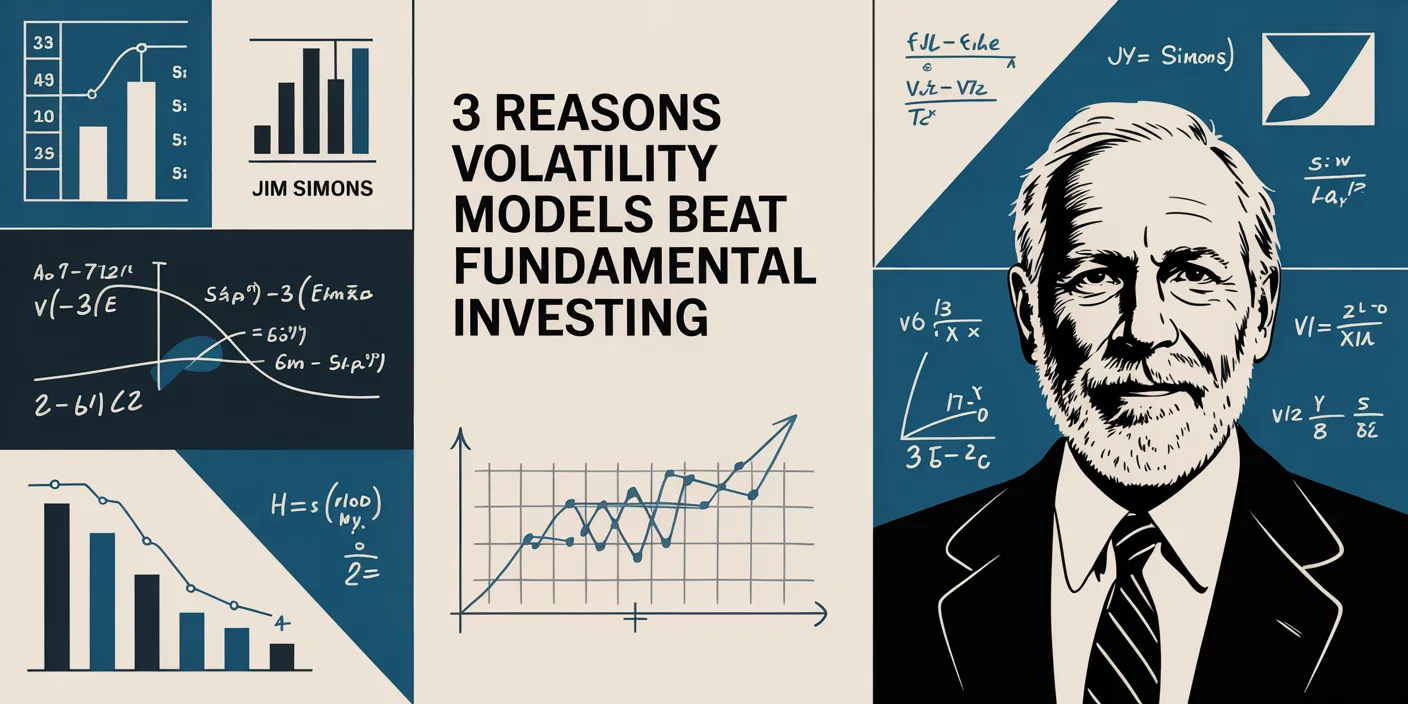
Jim Simons charged a 5% management fee and 44% performance fee, and investors still lined up. Here’s what his math-first approach teaches volatility traders.
Jim Simons is considered by many as the best hedge fund manager of all time. When he passed away last year we posted how he had a hundred Ph.D.s working for him.
He charged a 5% management fee and 44% performance fee, yet investors paid these astronomical fees because even after fees, no one could match his returns. What made Simons different? He filled his fund with mathematicians and not fundamental analysts.
We recently found this old video of his which reminded us why we are volatility traders instead of fundamental traders.
Prices are driven by millions of participants with different personalities, time horizons, information, and emotions. This creates persistent mispricings in the market that volatility tools can detect and exploit.
Evaluating balance sheets, assessing management quality, and examining a company’s product line rely on judgment calls that are difficult to backtest. We want everything testable, quantifiable, and free of human emotion.
How do you backtest “strong leadership” or “compelling product vision”?
Simons initially employed fundamental traders with mixed results, but his performance exploded and revolutionized the industry when he brought in pure mathematicians like Robert Mercer, Peter Brown, and David Magerman and eliminated all subjective trading. The shift from subjective analysis to statistical models created the most successful investment track record in history.
CI Volatility’s models are built on the same philosophy Simons advocated: every signal is testable, every decision is quantifiable, and emotion never enters the equation. Whether you’re trading stocks, options, or volatility products, the ability to backtest strategies and calculate probabilities for each trade is what separates systematic profits from fundamental guesswork.
Comments
Loading comments…